Table Of Content

Preventing ingrown hairs can decrease your risk of related infections. If ingrown hair infections recur or are severe, you may have an underlying condition that needs medical treatment. This can help ease the ingrown hair out of the skin on its own.
Products & Services
That said, if the area is infected, you need to see your doctor. If you shave or wax with any sort of regularity, there is a 97.6 percent chance you've had an ingrown hair, one of the most annoying (and painful) beauty problems. If you are down for in-office treatments, professional hair removal is an option to make sure this problem goes away—and stays away.
Infected ingrown hair treatment
Ingrown Hair Removal: How to Get Rid Of Ingrown Hairs - Men's Health
Ingrown Hair Removal: How to Get Rid Of Ingrown Hairs.
Posted: Tue, 03 Oct 2017 07:00:00 GMT [source]
Schubert suggests stocking up on one, as it can help soothe irritation while also getting rid of dirt and excess oil that’s clogging the pore or exacerbating the issue. Squeezing an ingrown hair will increase the risk of infection. If an infection is present, squeezing the bump may worsen it. Never pick or pop an infected ingrown hair, as this also increases the risk of complications. Keep reading to learn how to recognize an infected ingrown hair, as well as tips for treating and preventing them. An infected ingrown hair happens when a hair is blocked from leaving the skin or newly emerged hair curls back into the skin, and the follicle becomes infected.
What does a trapped ingrown hair look like?
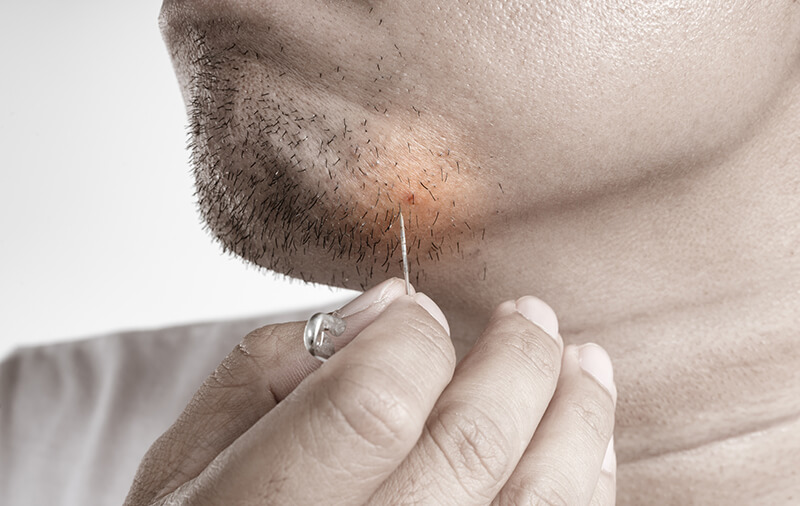
Sometimes, you can visibly see the hair growing in the wrong direction, but not always. An ingrown hair can also turn into a more painful, pus-filled sore. Most ingrown hair infections resolve in time with good hygiene, and over-the-counter creams may also help. Picking at the hair can increase the risk of an infection spreading or worsening. If the infection becomes severe, a doctor may recommend antibiotics or other treatment. If you often develop infected ingrown hairs, the doctor may take a skin sample for testing.
While there’s no fail-proof method, you can typically prevent ingrown hairs by following good skin care practices before, during and after shaving. Tea is known to have many natural healing properties, and black tea, in particular, is anti-inflammatory, which allows it to soothe skin and reduce redness. It also contains antioxidants like caffeine, which, aside from being part of our morning routine, also has great preventative acne and anti-aging benefits. Caffeine is also an anti-inflammatory and, therefore, a key benefit for ingrown hairs. Shaving in the direction the hair is growing rather than the opposite way can help minimize ingrown hairs.
The ingrown hair may eventually make its way out of your skin. There are also situations where the hair will continue growing under your skin. Waxing, plucking and threading hair can also lead to ingrown hairs.
Use the right razor
You can also avoid shaving entirely by using alternate hair removal methods. “Laser hair removal is the best way to permanently avoid ingrown hairs. Electrolysis, another hair removal method, has a greater risk of ingrown hairs. However, for patients with very light hair, laser hair removal may not work and electrolysis is the best option,” Khorasani says.
Things you can do to treat and prevent ingrown hairs
Abrasive scrubs like sugar and salt scrubs do exfoliate the skin but often at the expense of causing excess skin irritation, Dr. Murphy-Rose says. Use a warm washcloth to gently exfoliate and loosen dead skin. Dr. Murphy-Rose recommends doing this toward the end of your shower or bath when the skin is saturated with water. Ensure the temperature isn't too hot, and let the warm water do its thing. You can use a clean, warm washcloth and gently rub over the area to exfoliate and encourage the hair to emerge, Dr. Goldenberg says.
Professional hair removal treatment.
An infected ingrown hair — also known as folliculitis — typically looks like a bump, a hard lump, or a cyst under the skin. Ingrown hairs are more prevalent in folks with coarse or curly hair since these hair types are prone to growing sideways or into the skin. For instance, when curly hair is cut too close to the skin’s surface, the sharp end of the hair burrows its way back into the skin, according to Khorasani. It also possesses anti-inflammatory and antibacterial properties, which are two key components in combating ingrown hairs. Honey, oatmeal, and yogurt are just some of the ingredients you'll find recommended below by dermatologists, Kautilya Shaurya and Blair Murphy-Rose, along with the co-founder of LUSH skincare, Helen Ambrosen.
"Tea tree oil is a natural oil that has antibacterial, antiseptic, and anti-inflammatory properties," says Marie Hayag, MD, a board-certified dermatologist. This may help coax the hair up and out through the skin if you can see the hair and if it’s very close to the surface, says Dr. Weschler. Professional hair removal services work by removing the hair, permanently, at the root. If you suspect your ingrowns are due to shaving (a likely cause), invest in better shaving tools, and take the time to do it correctly.
"Apply an unscented, alcohol-free moisturizer to both sides of the bikini line to lock in the moisture and avoid over-drying, which leads to further irritation," says Dr. Engelman. Always make sure you’re shaving when the skin is damp and with a gel or lotion. You might think this shaving accessory is just a feel- and smell-good component to the process, but it’s way more than that. The results of electrolysis and laser hair removal are immediate. You can’t always prevent ingrown hairs, but you can take steps to lower the chances of them developing. Exfoliation should be approached carefully, as it causes inflammation, which leads to hyperpigmentation and may not be very helpful in resolving ingrown hairs.


No comments:
Post a Comment